

By John Powell – Binge News
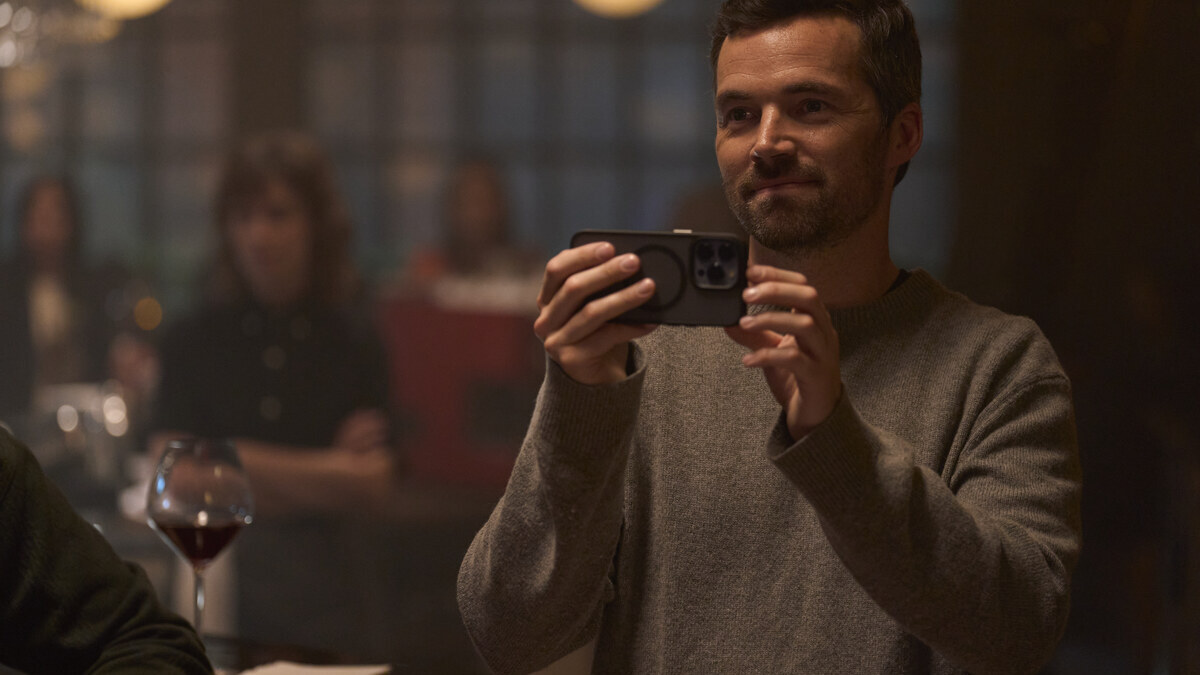
Fate? Destiny? Is it a bit of both that guides our complex lives? That is one question the new Netflix series Ripple tries to answer. In the show, four strangers living in the hustle and bustle of New York City come together after a sudden loss to one generates a “ripple effect” that causes their lives to cross paths. The bar they all happen to find themselves in is owned by Nate, played by Ian Harding. Several facets of Nate’s life has been turned upside down forcing him to seek out comfort and understanding in the strangers who take up residence at his bar.
Pretty Little Liars fans will recognize Harding from his somewhat controversial role as Ezra Fitz, the teacher who sparked discussion about trust and manipulation amongst fans of the purposely morally grey, guilty pleasure of a mystery–thriller. Harding though he has appeared in everything from Ford v Ferrari, the voice of Harris in animated series Kipo and the Age of Wonderbeast to a small role of a “party goer” in Tate McRae’s music video: What Would You Do? The complicated role of Nate lands Harding back in a more complex dramatic role.
John Powell: You’ve had your hand in a lot of different productions, a lot of different things. Does Pretty Little Liars still have a good place in your heart? Do you mind be recognized for that role?
Ian Harding: Oh, yeah. I mean, it depends on what the context of the recognition is. I realized, especially the storyline with the teacher, student thing, has not aged well. I remember when a couple years ago, show called The Teacher. It was basically that, but the real life consequences, how their lives unravel so naturally my storyline came back up. I was like: ‘Oh, yeah, no, this is not great but for the most part I always love it! I’ve actually been chatting with Lucy (Hale) a lot recently, and I was at Torrey DeVitto’s wedding. Yeah, we’re all still chums.
John Powell: Every episode of Pretty Little Liars was a really crazy ride. Ripple is far more grounded. How was your approach to that very human show?
Ian Harding: I think it’s always the writing. Thankfully, Michele Giannusa was just awesome and was able to organically craft everything so that it really felt like get you to this point and then get you to this point.
It made more sense that I had a better sense of who he was and I got his perspective…It was just because everybody was really invested and cared about it and was thoughtful about the work. Especially with TV, it’s very fast moving so you just kind of have to go with that.
John Powell: The show is about bunch of strangers who find that they have something in common, come together. Please describe everybody who your character is and how significant they are to the story.
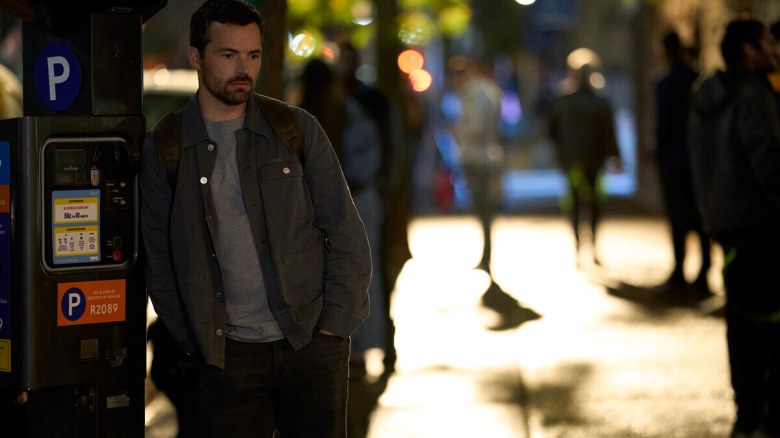
Ian Harding: I play Nate. Nate owns this bar and music venue in New York and Nate’s life is sort of cracking. He is a guy who has always been pulled together, who has always been self-driven, who has always cared about what he believed to be meaningful things and then all of these sort of pillars of his life start to kind of crack.
I think in the first episode I say: ‘I don’t get it. I don’t drink. I don’t smoke. I don’t do any of these things? How did this happen?’ That’s just life. He loves his family and he loves being a dad but also that starts to kind of crack and this venue that he put his heart and soul into, it’s not doing well. So, it’s all the screws are just tightening and so the thing that maybe saves him is the people that he meets and connects with and what he builds with them.
John Powell: I can empathize with him again. Years ago, I went for a heart test, and there was a guy beside me in a bed and he was this athlete. The doctor was like: ‘You have heart issues. We’ve got to investigate. He was in disbelief but was just his genetics. What drew you to the character as he’s got a lot of things going on?
Ian Harding: I love those kind of stories, the kind of the tragedies, in some way, but you never play it as tragic. What Michelle did was she wrote was he didn’t wallow. All of the characters kind of push against and grapple with whatever that obstacle is that they’ve been given…It’s like all of these things that you thought were steady are not and how do you not let these things break you? That’s what’s interesting and that’s what’s compelling to watch too.
John Powell: One of the core concepts of the show is this idea of fate versus destiny. Where do you kind of land on all of that? I believe we’re in control of our own decisions and things just happen around us we cannot control. What’s your take on everything?
Ian Harding:I think it’s probably all of those things at once and there are certain components in life that you can’t control but you can only kind of control your reaction to them, right? I think that it’s all depending on what kind of philosophy you want to look at it with. If you’re religious in any way, THIS is actually what is meant to happen. God has a plan for you or whatever. I think you can kind of bring all that together and say: ‘Okay, at no point does wallowing or necessarily running away from thing help.’ I think you can be angry and emote and let it all out and say what you feel.
I’m sure there’d be a whole lot of raging and sadness at the fact that I’ve been given dealt these cards but then you get to a point you say: ‘Okay, so now all I can do is deal with this.’ I think you can’t control what happens to you but you can control how you react to it.
John Powell: Another core issue is how people can be anonymous in a city because of all the faceless people around you, like here in Toronto. How do you feel about that?
Ian Harding: It was so funny that you said Toronto because obviously the show was set in New York but we shot it in Toronto. It was interesting the different cultures in the city, so much is beautiful. There’s so much beauty in New York as well but it is New York so it obviously has an underbelly as well.
I love that these strangers meet and connect and it’s a slow thing. It feels organic and it makes sense. Nothing really feels forced. I feel like that’s actually the kind of magic of these places because spending time in New York, sometimes there is all this hustle and bustle but you still have these moments of connection that you just kind of have to follow.
I remember years ago, I was actually in Munich with my wife and we were walking around and trying to go this art museum but it was closing early that day and we ran into somebody else…What we ended up doing was meeting each other with authenticity and not trying to shirk off this interaction. Then the next thing you know, we spent like hours with this guy walking around the English garden and then at the end, it was really beautiful. He said: ‘Could you do me a favor? Let’s not exchange emails or contact at all. We said: ‘Yeah, let’s leave this as this moment.’ That was one of the most beautiful interactions of our lives so I think that sort of spontaneous experience is possible and I think that’s what all these people experience. In the case of the show, continue to foster those relationships.
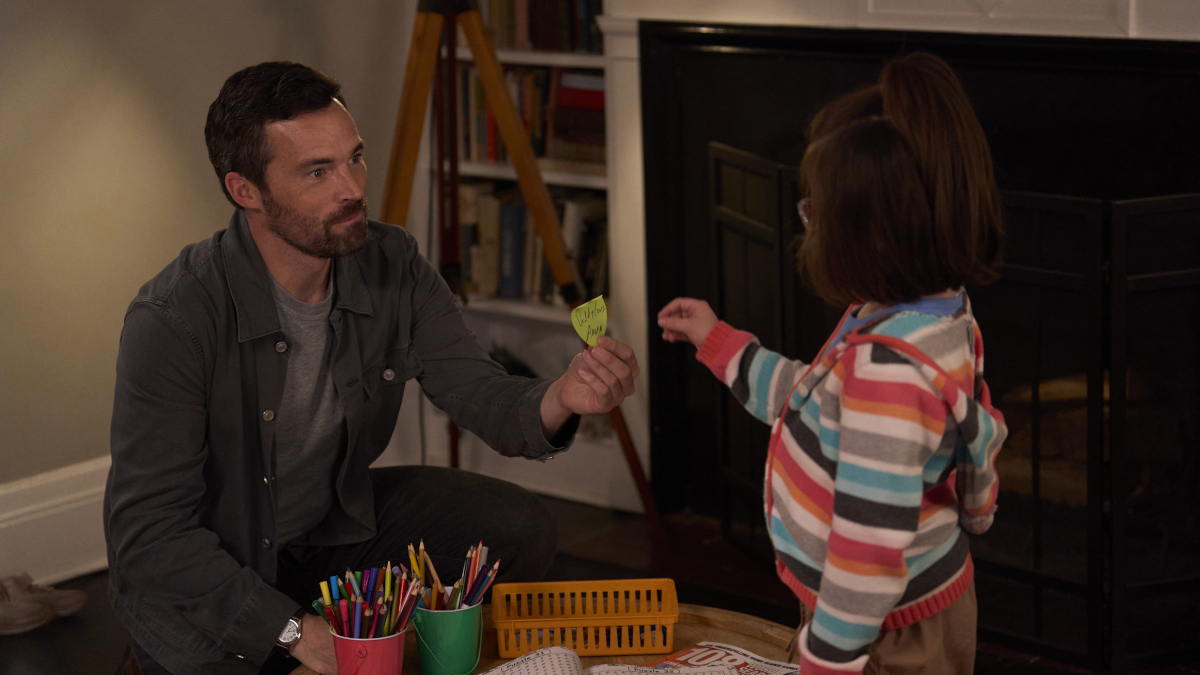
John Powell: Speaking of special relationships, Nate has a deaf daughter played by Hazel Lagrandeur. Lagrandeur is deaf actor. How was it like working with her and what did you learn as you went through the process?
Ian Harding: I didn’t know ASL at all. We definitely had a bunch of wonderful teachers and there’s like a whole team that helped us. After a while, it just became the equivalent of working with somebody that just speaks a different language. I learned so much about the deaf community…I scratched the surface but I tried to be thoughtful about it.
John Powell: Speaking of moments, you have your love interest, Kris in the show. I love the dynamic because you have somebody who’s rock steady and you’re kind of being buoyed and bouncing around, floating around. What was the dynamic and the chemistry you guys had?
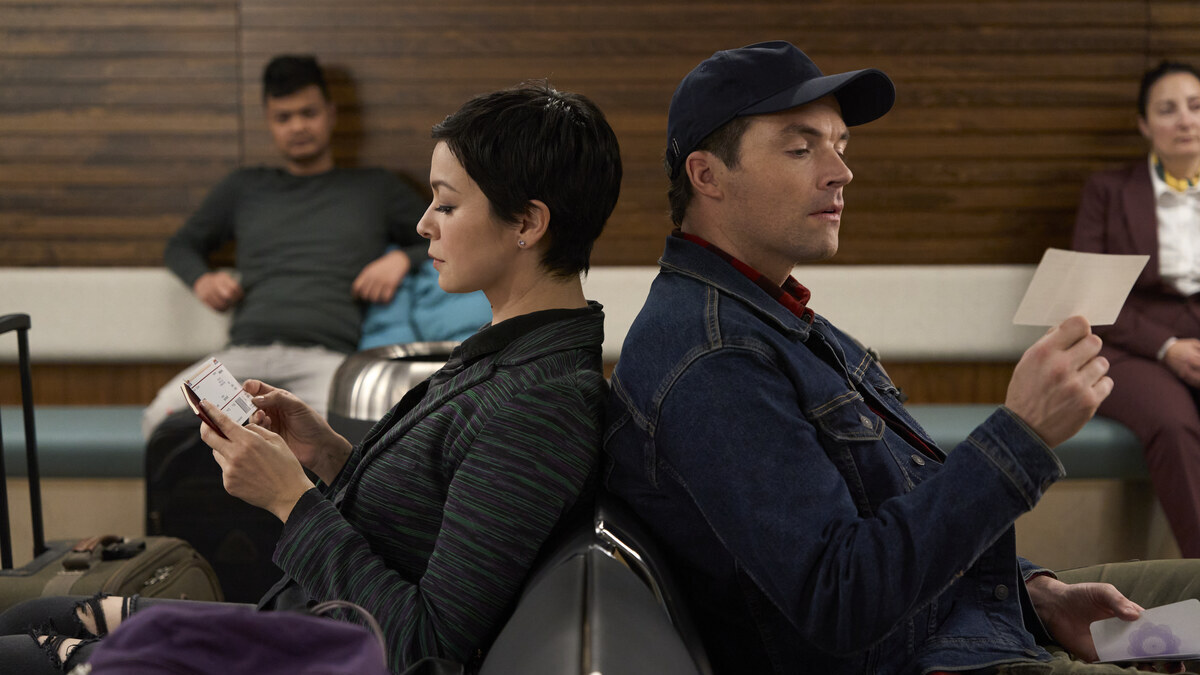
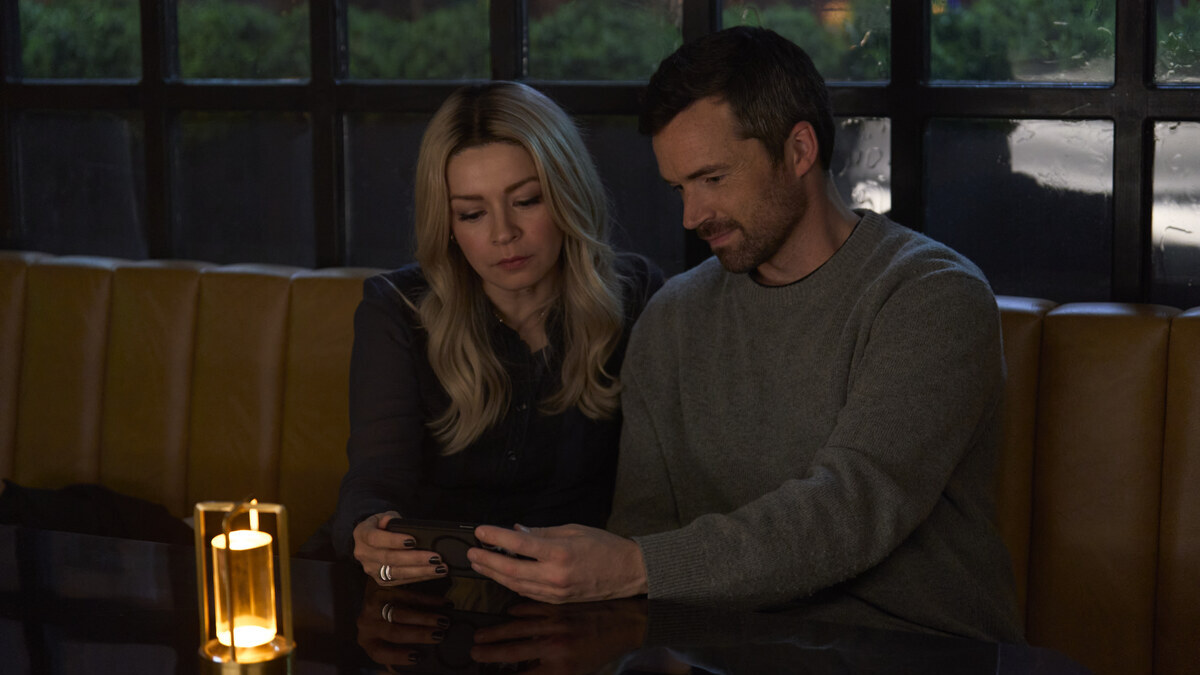
Ian Harding: Oh, I loved it! It does help that Julia Chan and I seem to know and have met and worked with everybody else except each other…We have that in common, right?
There is that kind of intangible thing that…you just interact with somebody and you just get it. I think she and I were also at similar stages in life and career and she just finished chemotherapy in February of last year and then we started shooting in August or September, so it was all still very new. I had also experience with lupus, being around illness or chronic illness or having that spectre always with you. It was something that I was familiar with. I think there are certain aspects of people’s personality who have lived with that, who have lived with serious illness, that you just get. You just kind of have a language and so we were able to instantly connect.
John Powell: The connection that you are talking about, does it happen very often on a project?
Ian Harding: No, you can try to manufacture it but I think you have to have two people that are willing to listen and be vulnerable with each other. If you’re an actor, ideally, that’s 90% of it…It’s about being vulnerable and listening to each other. I think that’s what you have to do in life as well as to create chemistry on screen.
John Powell: Are you happy with how things wrapped up for your character in season one and is there a season two? Is that in the books?
Ian Harding: I mean, we’re hoping. It’s like one of these thing as in we could find out this afternoon, find out in February. Who knows?
I think the response has been really positive and I know that the show has cracked the Top 10 in Canada, Ireland, Australia, hopefully it happens this week for the US, which is always a positive sign.
I think it’s totally possible. I think I’m not sure what to expect for season two, because I love Michelle’s writing, period. Full stop. I also love how the show ended because it’s both a positive note. Yes, an uncertain one for everybody but was kind of great was the show is about found friendship and creating community. I think as much as these people needed each other by the end they kind of find themselves and so Season Two might be having to reconcile with these new selves in these new situation and that’s what I think is inherently interesting.
 Binge News